
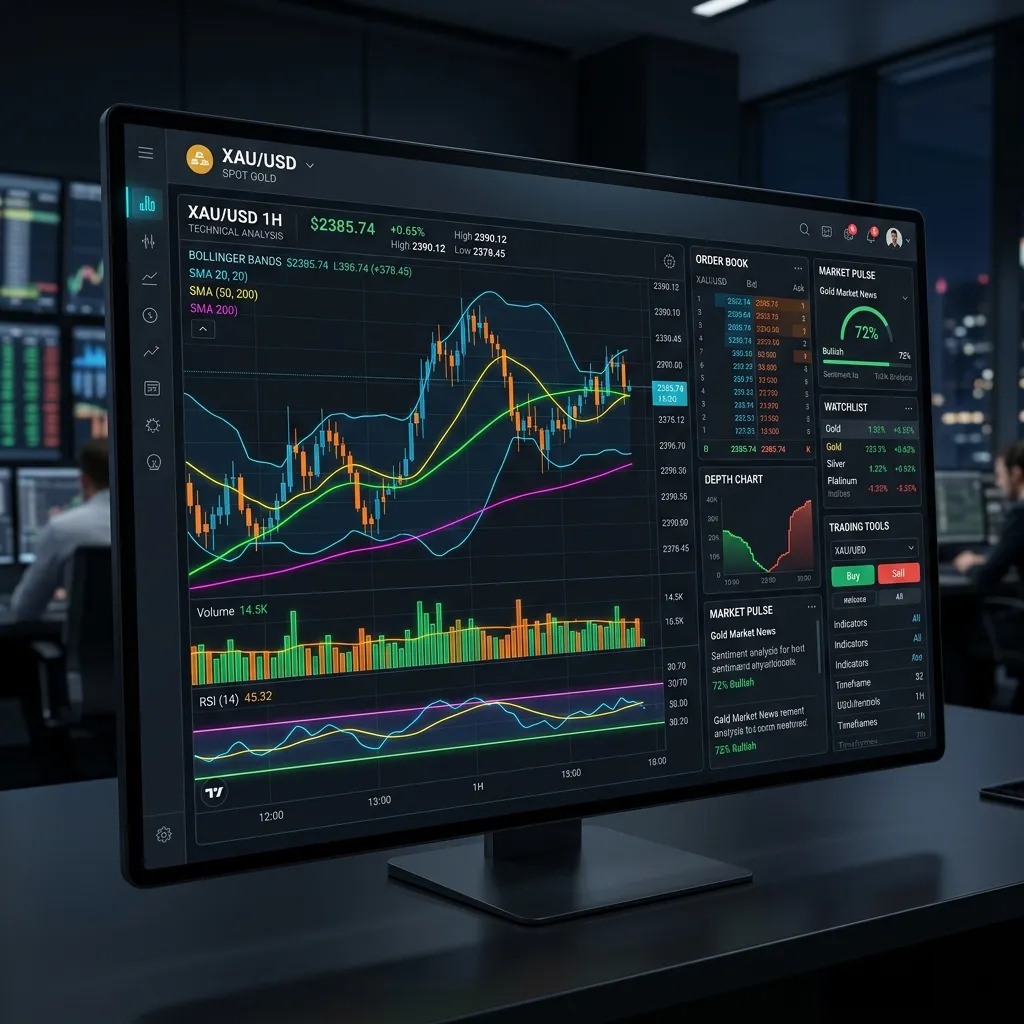
How Does Quantitative Trading, Fintech, and Liquidity Mechanics Work?
When our macro team reviewed recent supply chain data, it became obvious that standard market reports were leaving out crucial details. Understanding energy and shipping spreads isn't optional anymore. It's totally necessary for portfolio positioning. Here is what the actual data tells us.
- ∴Latency Arbitrage Desks: Ultra-low latency co-location networks are wild. They catch micro-mispricings across separate order matching engines in fractions of a second.
- ∴Automated Corporate Hedging: Modern ERP setups rely on instant fintech API bridges. They execute commodity and FX hedges automatically to lock down invoice margins on the fly.
- •Private Credit expansion: Direct credit funds bypass the slow, traditional bank routes. They offer fast, highly adaptable liquidity solutions to growing mid-market enterprises.
How Does Quantitative Order Book Modeling Work?
To figure out liquidity and avoid slippage, quant desks use a specific metric. They calculate the Weighted Order Book Imbalance:
An imbalance value of Ib ≈ 1 points to heavy buy-side pressure. The price will probably drift up shortly. When algorithms spot this, they instantly bump up their bid pricing to secure the trades.
How Does Technical Python Order Book Imbalance Signal Script Work?
Below is a Python trading script we put together. It computes the order book imbalance in real time. It throws execution alerts if the buy/sell volume matches specific high-probability conditions:
How Does Quantitative Fintech Outlook Work?
Institutions are fully pivoting to automated payment rails and private debt structures right now. If you're running a scaling B2B enterprise, hooking fintech APIs directly into your general ledger is the smartest move. It slashes international wire fees. It removes the headache of manual auditing. Best of all, it gives you immediate access to capital for high-yield moves.